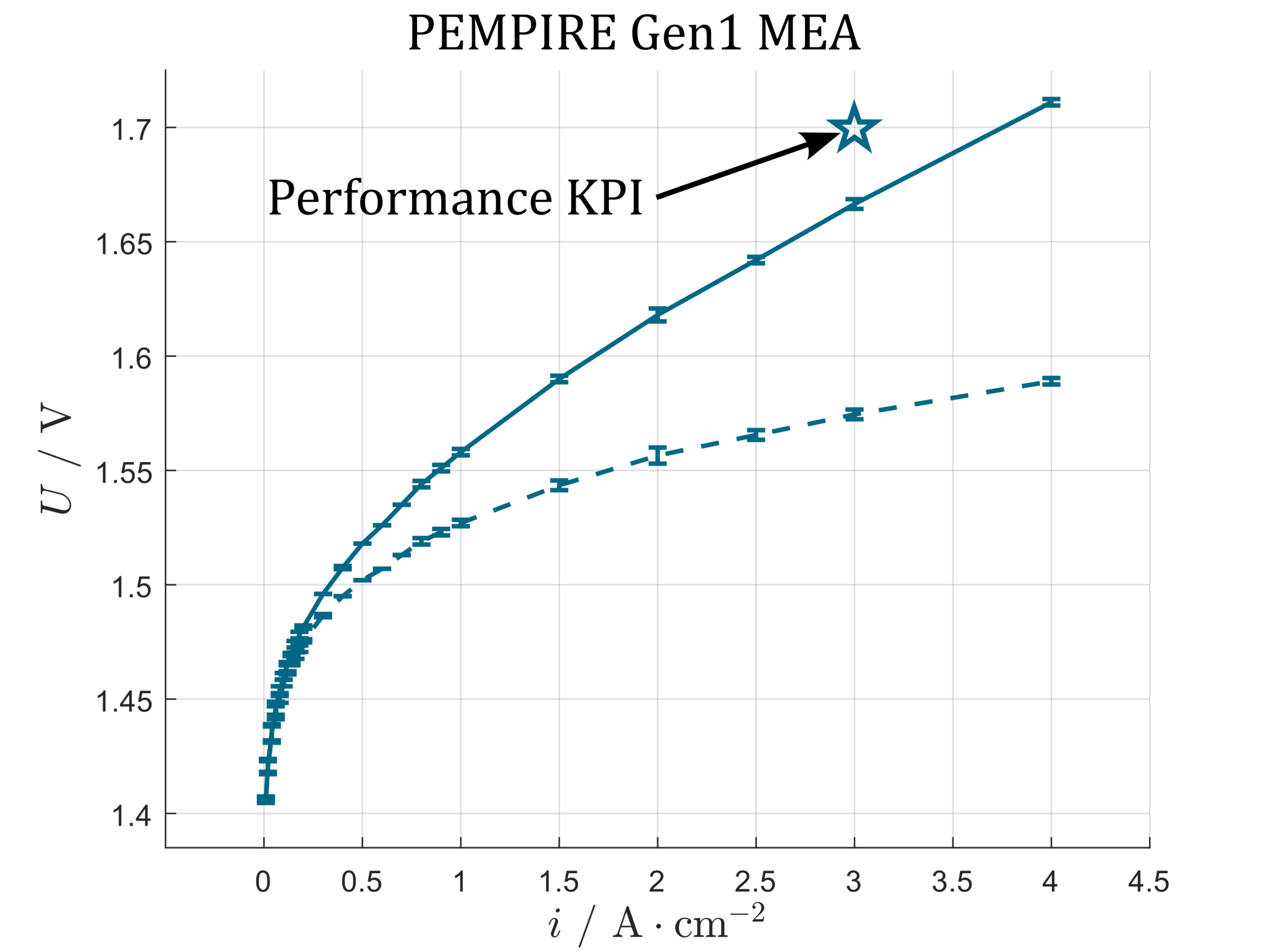
The PEMPIRE project has reached an encouraging first step in the development of next-generation PEM electrolysers. Initial performance measurements of the project’s Generation 1 Membrane Electrode Assembly (Gen1 MEA) show highly reproducible results and performance significantly better than the PEMPIRE target of 1.7 V at a current density of 3 A/cm², while using less than 0.2 mg/W of critical raw materials.
Combining high performance with lower material use
PEM electrolysers are well suited for renewable hydrogen production, but their wider deployment still faces challenges such as high costs, durability and the use of scarce critical raw materials, particularly iridium. PEMPIRE addresses these challenges by developing scalable, cost-efficient and circular PEM electrolysers while substantially reducing the use of critical raw materials.
At the heart of this work is the Membrane Electrode Assembly (MEA), a central component of the electrolyser cell. Within Work Package 1, led by IRD Fuel Cells, PEMPIRE partners are developing successive generations of MEAs by combining low-iridium catalysts, advanced porous transport layers and optimised manufacturing processes. A particular focus is placed on the electrode–porous transport layer (PTL) interface, with the aim of achieving high performance and durability while reducing the use of scarce materials.
What do the first results mean?
The first Gen1 measurements provide a promising indication that the project is moving in the intended direction. The measured performance is significantly better than the project target of 1.7 V at 3 A/cm², while keeping the use of critical raw materials below 0.2 mg/W.
In simple terms, the voltage indicates how much electrical energy is required at a given operating point, while the current density describes how intensively the electrolyser cell is operating. A lower voltage at the same current density means a more energy-efficient electrolysis process.
At the same time, keeping the platinum-group-metal loading below 0.2 mg/W addresses another key PEMPIRE objective: reducing dependence on scarce materials without compromising performance.
A foundation for the next development steps
Gen1 is the first step in PEMPIRE’s broader development pathway. The insights gained from these initial MEAs will feed into the development and optimisation of subsequent generations (up to Gen3), with the project ultimately aiming to integrate its innovations into scalable, industrially relevant PEM electrolyser systems.
These promising first results therefore provide an important foundation for PEMPIRE’s next development stages and its overall goal of making PEM electrolysis more efficient, high-performing and resource-efficient.